
Selling Japanese Products in Vietnam: 5 Steps to Connect Social Media and Live Commerce to Purchases
Define customers, demonstrate your product, clarify the purchase route, check margins and run a small sales test in Vietnam.
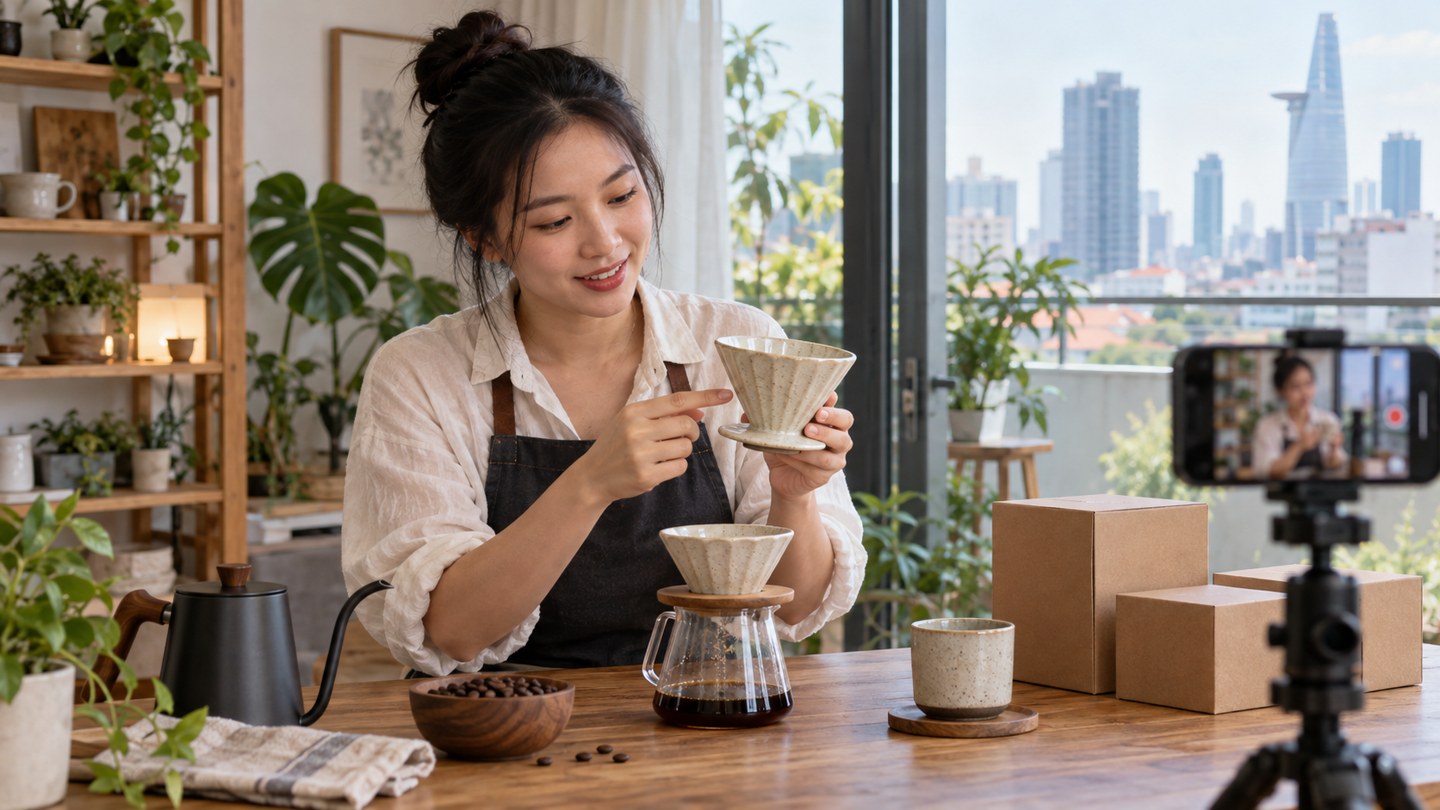
AI-generated image. It does not depict a real store, staff member or client project.
The main takeaway
Before increasing social media posts for Vietnam, align four things: who you are selling to, what you will demonstrate, where customers can buy, and whether each sale leaves a profit. Live streaming is one sales method to test after this preparation.
It is tempting to assume that Japanese quality will speak for itself or that popularity on TikTok will automatically increase sales. Yet customers still need answers about price, use, delivery and support before deciding to buy.
This article proposes a small-scale testing approach for Japanese companies selling goods and people starting a business in Ho Chi Minh City. Its focus is product sales rather than attracting diners to a restaurant.
What research suggests about uncertainty before purchase
An ACCESS ONLiNE column published on May 25, 2026 describes a Q&Me survey conducted that April among 245 live-commerce shoppers in Ho Chi Minh City and Hanoi. According to the column, 82% named price or discounts as a purchase driver. [1]
These respondents had already bought through live commerce. The percentage cannot be generalized to all Vietnamese consumers or every product category. Although this article was prepared on October 20, the survey itself took place in April.
Our recommendation to businesses selling in Vietnam is to look beyond discounts: demonstrate how the product works, explain the conditions clearly and answer questions before purchase.
1. Define a customer through a specific buying situation
A person using coffee equipment at home needs different information from a café buying equipment for business use. Start with one sentence describing whose situation your product helps—for example, a Ho Chi Minh City resident who makes coffee at home.
Then list three likely questions, such as price, maintenance effort or suitability for local use. Those questions make practical video topics.
2. Make Japanese quality visible
Words such as “high quality” and “convenient” do not always help someone imagine using a product. Show the actual size, operation, cleaning and storage. Instead of merely translating a Japanese script, explain the product in Vietnamese in the order your intended customers need.
- Ease of use: demonstrate the real steps from preparation to cleanup.
- Size: place it beside a hand or a familiar cup.
- Reassurance after purchase: show included accessories, instructions and the support contact method.
Limit comparisons and performance claims to what can be verified. Do not present an AI-generated usage scene as a performance test of the real product.
3. Connect the post to a clear place to buy
Check whether viewers must search again for the product name or ordering method. Match the item shown in the video with its sales information, and explain price, delivery conditions, availability and the inquiry channel.
An online store, a physical shop and an inquiry-based sale need different routes. For an initial test, choosing one main purchase destination makes it easier to track which posts lead to orders or inquiries. Check the platform's terms and your sales conditions individually before starting.
4. Calculate profit per order before discounting
Higher revenue may still leave little profit after platform fees, advertising, delivery contributions and content production. Subtract procurement and import-related costs, packing and delivery, and selling expenses from the selling price before deciding how much room you have for discounts.
Alongside revenue, record orders excluding returns, promotional cost per order, and profit after promotional costs. Agree with the team on which expenses each measure includes.
5. Test customer response and operational workload on a small scale
Rather than launching many products, compare different explanations for one product. Look beyond views to visits to the product page, inquiries and orders. With limited exposure, do not immediately treat small differences as proof that one version is better; customer questions are also useful evidence.
- Preparation: choose one product, one customer profile and one purchase destination; check that product descriptions and sales conditions match.
- Production: make videos about use, size and care; check that each answers a concrete question.
- Review: revise explanations based on responses; check for changes in purchasing behavior and support workload.
This is an example approach proposed by WDVN. Timing, content volume and outcomes depend on the product, budget and team.
Use AI business support for preparation and review
AI can help organize questions, draft video scripts and Vietnamese descriptions, and assist with results summaries. A responsible person must still verify prices, stock, specifications and natural wording. Before entering customer information, check the service being used and how that information will be handled.
Rather than producing more AI output as an end in itself, ask whether it reduces checking time and answers customers' pre-purchase questions. That makes it easier to integrate into daily work.
Frequently asked questions
Is live streaming essential for selling Japanese products in Vietnam?
No. Assess whether a demonstration helps explain the product, whether you can answer questions during the stream, and whether inventory and delivery arrangements are ready.
Can I start while preparing to establish a business in Vietnam?
You can begin defining customers and preparing product explanations. Start actual sales only after checking procedures and sales conditions appropriate to the product and business structure.
Can a small account run a useful test?
Follower count is only one factor. You also need suitable viewers, a budget and a clear route to purchase. Gather responses on a limited scale and assess whether you have enough data to make a decision.
Unsure where to start selling in Vietnam?
If you want to sell Japanese goods in Vietnam or use social media to generate purchases, begin by clarifying your product, target customers and sales method.
WIREDREAM VIETNAM supports Japanese product sales and social media marketing. We can discuss your product's characteristics and current challenges, and consider how to communicate with local customers and connect that communication to sales.
You can contact us even before you have a detailed plan.
Discuss product sales and social media in Vietnam
References and sources
ACCESS ONLiNE, “Live commerce emerges as a mainstream channel: price and discounts over shoppertainment” (May 25, 2026).
Read the original article
The market and survey information above is attributed to that article. The practical steps are WIREDREAM VIETNAM's proposals for businesses selling in Vietnam.