
Pricing Japanese products in Vietnam: what remains after a promotion?
Map product, delivery, selling and promotion costs before discounting. A worked example shows how to compare the amount remaining from each order.
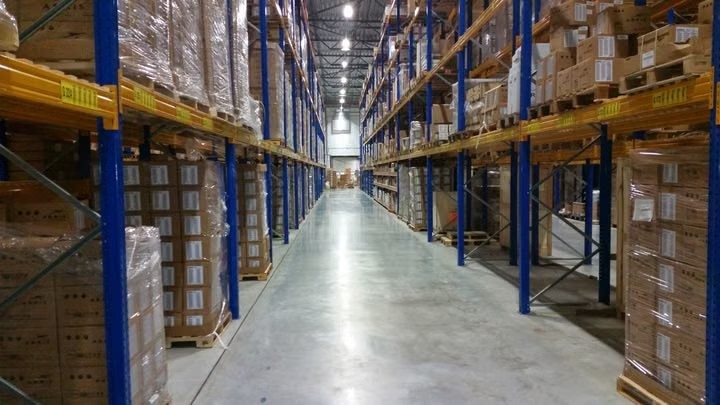
Illustrative stock photo: cardboard boxes stored in a warehouse. This is not a photograph of WIREDREAM VIETNAM's facilities or past business activities. Photo: Handi Boyz LLC / Pexels.
When selling Japanese products in Vietnam, check the money received and the costs of each order before cutting prices to match competitors. Simply adding a fixed markup to the purchase price does not show what remains after delivery subsidies, selling fees and promotion costs. Instead of judging customer acquisition in Ho Chi Minh City by sales alone, start with a worksheet that shows how much you spend and how much each sale can leave you.
Review your pricing before the year-end sales season
In an article dated October 24, 2026, ACCESS ONLiNE described Vietnamese consumers carefully weighing prices and whether they need a purchase. Another article published that day discussed distribution costs between producer and retail prices. The former covers market trends for January–September 2026, while the latter discusses recent trading conditions, among other matters. These are not events that occurred only on October 24.
These reports do not mean every product should be cheaper. The following is practical advice from WIREDREAM VIETNAM for businesses selling Japanese products locally. Start with one core product and compare the economics of a regular sale with a promotional sale.
1. Separate the purchase price from the cost of making a product ready for sale
Do not treat the purchase price in Japan as your only cost. List international transport, customs-related expenses, local delivery, labels, packaging and storage. Actual costs vary by product, contract and import method, so check quotations and invoices. For taxes, avoid confusing recoverable amounts with costs you ultimately bear; confirm the treatment with your accounting and customs specialists.
When allocating shared freight costs to products, splitting them equally by unit is not always appropriate. Choose an allocation method you can explain internally, taking weight, volume and temperature-control requirements into account. If you buy in foreign currency, record the exchange rate and its date as well.
2. Check the fee terms for each sales channel
Costs arise differently in stores, wholesale and e-commerce. Check which amount a selling fee is calculated on, who pays delivery costs, who funds coupons and whether any costs are non-refundable after a return. Working backward from the amount paid into your account can overlook advertising charges billed later.
Start with a row containing: order number / sale amount / discount / fees / delivery costs borne by your business / product cost / packaging / returns and other costs. Keep contractual estimates separate from actual settlement figures so you can track the gap between assumptions and results.
3. Calculate what remains after a discount
The following assumptions are for explanation only. They are neither market benchmarks nor our results. This simplified example uses a consistent tax treatment for the amounts and assumes any additional tax liability is settled separately.
- Regular sale amount: 200,000 VND
- Promotional sale amount: 180,000 VND
- Product and packaging costs: 110,000 VND
- Selling fee: assumed to be 10% of the promotional sale amount, or 18,000 VND
- Delivery cost borne by the business: 20,000 VND
This leaves 32,000 VND before advertising and fixed costs. If advertising costs another 30,000 VND per order, only 2,000 VND remains. Returns, damage or other issues would create further costs. This is an estimate for comparing initiatives, not final accounting profit.
With the same assumptions and no discount, the amount remaining is 200,000 − 110,000 − 20,000 − 20,000 = 50,000 VND. Cutting the sale amount by 20,000 VND reduces what remains by 18,000 VND, even after the lower selling fee. Do not judge a promotion successful merely because more units sold: check the total amount remaining too.
4. Set promotion limits and stopping rules in advance
Before starting, decide the amount you want to retain, the advertising budget, the number of units covered, the review date and the person responsible. Even when the goal is first purchases, avoid expanding losses based on repeat orders that have not been demonstrated. Check actual repeat-purchase records and compare delivery subsidies and bundles using the same worksheet.
For example, deciding to review settlement figures after weekend sales and pause ads if the remaining amount falls below your internal threshold can prevent you from increasing the budget simply because a post gets a good response. Evaluate stock-clearance campaigns separately from campaigns designed to acquire new customers.
Frequently asked questions
Is looking at a profit margin enough?
You need both percentages and amounts. A good margin with few orders may not cover fixed costs. High sales with little left per order may not justify the workload. Also check the timing gap between receiving payments and paying bills.
What should we improve in SNS marketing?
Before offering a bigger discount, review whether customers understand who the product is for, when they would use it, what the price includes and the purchase conditions. When changing the message, track purchases and the economics of sales as well as inquiries. Results are not guaranteed.
Bring your sales terms and communication into alignment
If pricing and channel assumptions are unclear, it is difficult to decide what your social media announcements should say. If you are considering selling Japanese products locally, see our import, wholesale and sales support. For communication, see our social media marketing support. Through our contact form, tell us about your product, intended buyers and current challenges. We will confirm the scope we can support and discuss the next steps with you.
References and sources
- ACCESS ONLiNE, “Vietnam's consumer market: sales rise 13.4%, but purchasing power remains cautious; inflation challenges year-end sales” (Japanese article, October 24, 2026). Original article. Checked October 26, 2026. The market overview is based on this outlet's reporting. No statistical figures from the report are quoted in this article.
- ACCESS ONLiNE, “Vietnam's widening egg and pork price gap: why retail prices do not fall even as producers lose money” (Japanese article, October 24, 2026). Original article. Checked October 26, 2026. Referenced for its discussion of distribution costs; the worked example is not a transaction reported in that article.