
Restaurant marketing in Ho Chi Minh City: explain signature dishes in Japanese and Vietnamese
Go beyond translating dish names. Use a shared information sheet, bilingual examples, honest photos and customer questions to make your signature dishes easier to understand and order.
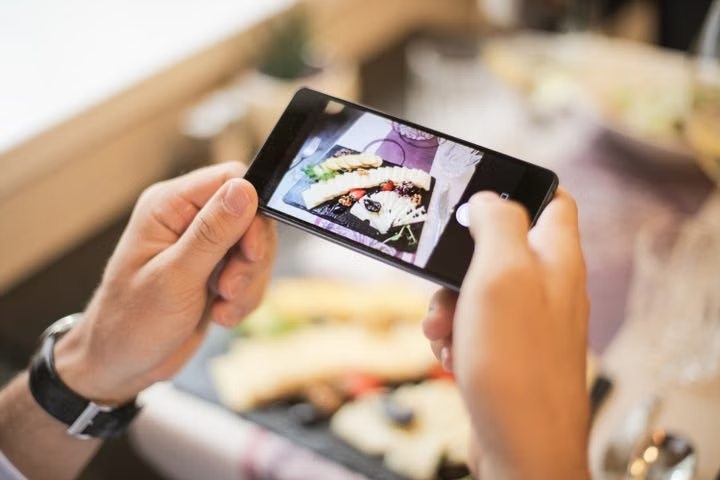
Illustrative stock photo: hands photographing food with a smartphone. This is not a photograph of the restaurant mentioned, a WIREDREAM VIETNAM client or our production work. Photo: Andrea Piacquadio / Pexels.
When a Japanese restaurant in Ho Chi Minh City introduces a signature dish on social media, simply translating its name into Vietnamese is not enough. Use photos and short descriptions to explain its taste, portion size and how to eat it. People familiar with Japanese food and first-time diners need different information before ordering. Start with one dish and make sure your description matches what customers will actually be served.
What an opening announcement can teach us about explaining a menu
On October 26, 2026, VIETJO reported the opening of Kawashima Shoten's second restaurant in Ho Chi Minh City and introduced its signature dishes. An official announcement from J-Links, which participates in the business, gives the opening date as September 16 and the press release date as October 23. The news publication date and the opening date are different.
Inspired by this news, the following is practical advice from WIREDREAM VIETNAM for Japanese restaurant operators. It is neither an evaluation of that restaurant's marketing nor a case study of our support. The aim is to turn a dish's features into information that helps someone seeing it for the first time decide whether to order.
1. List what customers may be unsure about before focusing on the dish name
Even someone who knows the word shumai may not know whether the dish is steamed or pan-fried, or what is inside. Adding the Japanese pronunciation of words such as dashi or donabe does not explain the flavor or how to eat the dish.
Have kitchen and service staff confirm the main ingredients, cooking method, flavor, serving temperature, and number of pieces or approximate number of diners it serves. Check the actual recipe for spiciness and information relevant to dietary restrictions rather than guessing. Direct allergy questions to someone at the restaurant who can assess seasonings and shared utensils as well; a translation alone cannot establish that a dish is safe.
2. Create one dish information sheet shared by Japanese and Vietnamese versions
Before writing every post from scratch, bring the following information together on one sheet.
- The official menu name and a short description that helps people picture the dish
- Actual ingredients, cooking method and flavor
- Number of pieces, portion size and approximate sharing guidance
- Price, tax and additional-charge treatment, serving hours and quantity restrictions
- Available ordering options, such as dining in or takeaway
- The person who checked the information and the review date
Use claims such as “shipped directly from Japan,” “house-made” or “additive-free” only when you can verify them. Decide which posts and menus need updating when origin or prices change so outdated information is less likely to remain.
3. Help customers imagine eating the dish instead of translating word for word
The following is an example for a fictional restaurant. Adapt it to the actual ingredients and serving details.
Japanese example: “Steamed shumai filled with pork and onion. Served hot, with 3 pieces per plate. Enjoy with a little soy sauce.”
Vietnamese example: “Xíu mại hấp nhân thịt heo và hành tây, dùng nóng. Mỗi phần 3 viên, ăn kèm một chút nước tương.”
Besides the dish name, this example explains the filling, cooking method, number of pieces and how to eat it. Prioritize concrete information that helps first-time diners choose rather than repeating abstract phrases such as “authentic taste.” Ask a local Vietnamese-speaking colleague to read the text and check whether it brings a different dish to mind.
4. Photograph the dish you actually serve
For a post selling your own menu items, photograph food your restaurant actually serves. Where useful, combine a view of the whole plate, a view of the inside or cross-section, and a short video showing how to eat it. Avoid styling or portions that differ substantially from everyday service. Showing the size of the plate is helpful too.
Stock photos can illustrate an explanatory article, but should not be presented as photos of your restaurant's dishes. If people or other diners appear, check permission to publish. Plan the shoot so normal service and hygiene practices are maintained.
5. Review social media reactions alongside questions asked when ordering
After posting, do not look only at views: share with service staff the questions customers asked about the dish. Repeated questions such as “Can one person order it?”, “Is it raw?” or “Is it available at lunchtime?” can inform the next post or menu description. Where your booking process allows, you can also ask customers, optionally, which post they saw.
Avoid attributing a good response to a single cause without evidence. Record what you changed in the photo, explanation or serving conditions. A post will not necessarily increase visits or orders. Review views and sales separately, and improve announcements so they reflect what your restaurant can actually deliver.
Frequently asked questions
Should the Japanese and Vietnamese versions be exactly the same length?
No, but facts such as ingredients, portion size, price and serving conditions must match. Check that you have not added a special offer only in Vietnamese or omitted a condition from one version.
Must we translate the entire menu before posting?
You can start with one dish that kitchen and service staff can verify. Confirm availability, stock and the ordering process before publishing. Once you have a dish information sheet, you can use the same checking process for other items.
Make your signature dish easier to understand and order
If you know what makes your food special but struggle to explain it in a post, see our social media marketing support. For opening preparations and local coordination in Ho Chi Minh City, see our Vietnam market entry support. Through our contact form, tell us about your restaurant, the dish you want to introduce and the social media accounts you currently use. We will discuss your challenges, confirm the scope we can support and consider the next steps with you.
References and sources
- VIETJO, “Japanese izakaya Kawashima Shoten opens its second restaurant in Ho Chi Minh City's Japanese district” (Japanese article, October 26, 2026). Original article. Checked October 27, 2026.
- J-Links, “Kawashima Shoten's second Japanese izakaya opens in Ho Chi Minh City's Japanese district” (Japanese press release, PR TIMES, October 23, 2026). Official release. Opening and announcement dates checked October 27, 2026. The practical steps and fictional copy example in this article are our proposals.