
Ho Chi Minh City stores: clearer access information during construction and entrance changes
Help visitors find your entrance with on-site checks, photos, Japanese and Vietnamese directions, consistent booking replies and clear update responsibilities.
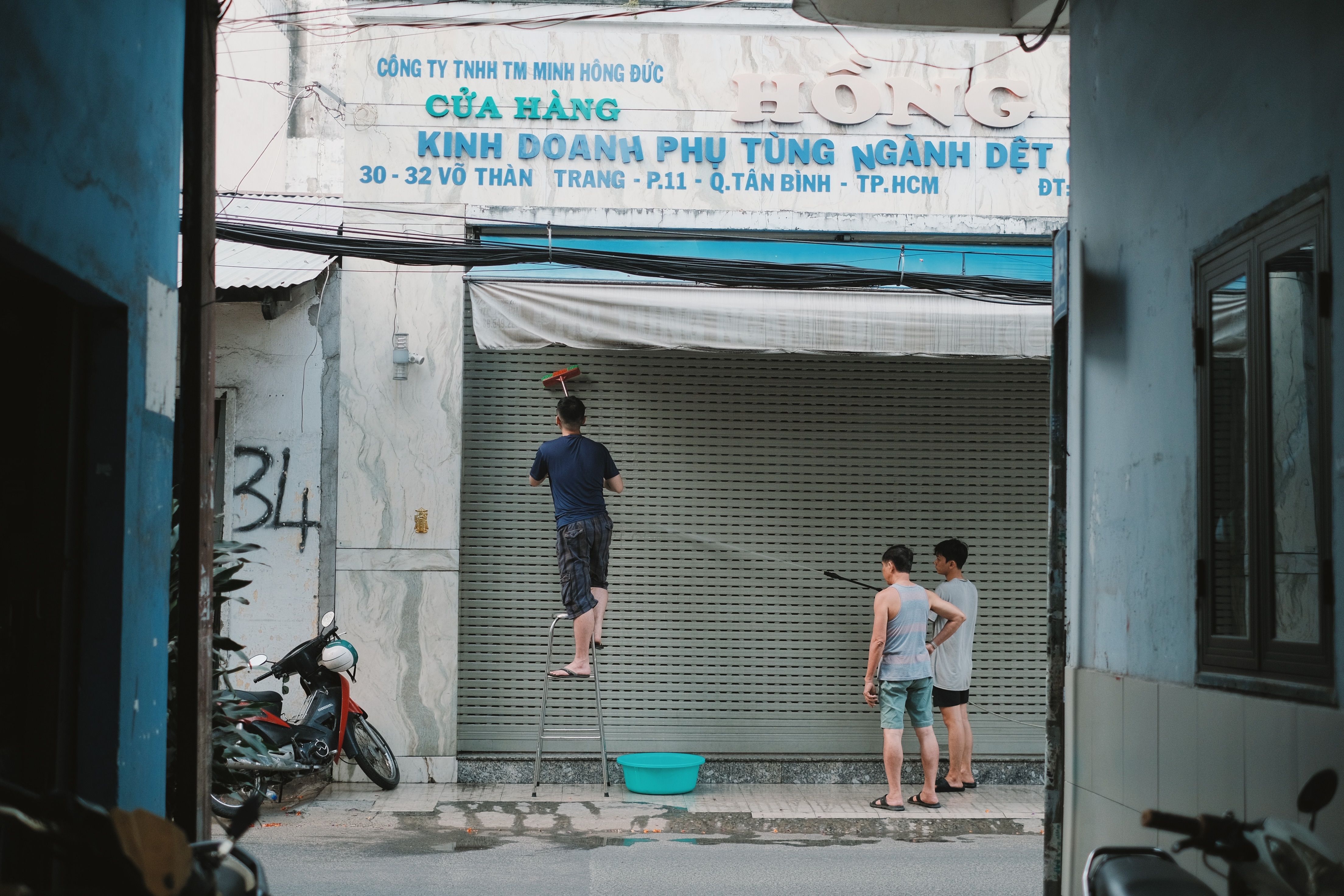
Illustrative stock photo: people working outside a storefront in Ho Chi Minh City. These are not WIREDREAM VIETNAM employees, clients or examples of our support work. Photo: Pew Nguyen / Pexels.
When construction starts near your Ho Chi Minh City store, or a building entrance changes, explain where customers can enter now before spending more on advertising. An address and map alone may not help first-time visitors identify the entrance or a drop-off point. Start with one access-information page containing photos checked on site, brief directions and the date checked, and link to the same information from social media and booking replies.
Use transport news as a prompt to review your own access information
On October 26, 2026, ACCESS ONLiNE reported on urban railway development and construction preparations in Ho Chi Minh City. The article concerns plans toward year-end and ongoing development; it does not mean access routes to every store changed on its publication date. Check the latest local notices for individual restrictions and construction areas.
The following is practical advice from WIREDREAM VIETNAM for stores affected by construction or entrance changes. While waiting for future transport improvements, you can organize information customers can use now so they do not get lost at the last turn.
1. Check the route to the entrance as a first-time visitor would
First, have a staff member walk from a nearby landmark to the store, checking the entrance, stairs or elevator and visibility of signs. Look for issues regular visitors may miss, such as construction hoarding hiding the building name or a gap between a map's arrival point and the actual entrance.
People arriving on foot, by motorbike and by car face different obstacles. For drop-off and parking, check local signs and building management guidance. Do not recommend an unauthorized stopping place just because it is convenient. Do not direct customers down a route you have not confirmed is open; ask the manager if necessary.
2. Show landmarks, entrances and changes with photos and brief text
Take photos from the direction customers will actually approach. Capture the building, the entrance area and a view showing the store name or floor, using only as many images as the directions require. If construction workers or passersby appear, check whether the images are appropriate for publication.
Include the following in your instructions:
- Store name, address and a map link
- The entrance currently in use and a recognizable landmark
- Walking directions and verified drop-off or parking information
- The period the change applies, or the next planned check
- The date checked on site and how to contact you if someone gets lost
Instead of “very close” or “the usual entrance,” describe something a first-time visitor can find. State if there are steps or stairs, and do not promise accessibility without checking.
3. Keep the facts consistent in Japanese and Vietnamese
The following is a fictional example. Always replace the landmarks and entrance details with those of the actual store.
Japanese example, translated into English: “The front entrance is not in use. Follow the blue sign on the right side of the building to the entrance at the end of the passage. There are stairs near the entrance. If you cannot find your way after arriving, please reply to this booking message.”
Vietnamese example: “Hiện không sử dụng lối vào phía trước. Quý khách vui lòng đi theo biển màu xanh ở bên phải tòa nhà đến lối vào cuối hành lang. Gần lối vào có cầu thang. Nếu chưa tìm được đường khi đến nơi, vui lòng nhắn lại trong cuộc trò chuyện đặt bàn này.”
Make sure the viewpoint for left and right and the sign's color match both the photos and the actual scene. Do not stop at the translator's review: have on-site staff read the directions and check whether someone can reach the entrance using that description alone.
4. Keep one source of information and link to it from each customer touchpoint
Use your website's access page as the source to update, and make it accessible from your social media profile, pinned post and booking confirmation reply. Directions written only inside an image are easy to overlook when updating. Keep a list of all places to review whenever something changes.
Avoid moving a store's map location to a temporary entrance that does not represent its actual location. Explain the address separately from how to enter the building. Add a link to current directions or a notice of the change to old posts so customers do not mistake an old photo for the current entrance.
5. Assign update responsibilities and decide when temporary directions should end
Decide who checks the site, who edits the Japanese and Vietnamese text and who publishes it. Update the last-checked date whenever the entrance changes again. If the construction completion date is unconfirmed, there is no need to publish a guessed date.
Ask service staff to share, where practical, where customers got lost and which instructions they saw. If several people struggle at the same place, review the photo angle or landmark. When the usual entrance reopens, do more than close the temporary notice: check that booking replies and pinned posts have also been restored.
Frequently asked questions
Is one social media post enough?
Some customers will not have seen it. Put the same directions in booking replies and on your website, and update them when conditions change. Prioritize making the same explanation reachable regardless of how a customer finds you.
How can we evaluate the change?
Record direction inquiries, late arrivals and mistaken entrances where you can. Do not attribute every sales change to better access information; first check whether fewer people get lost. This measure does not guarantee more visits or sales.
Help customers find their way before they visit
If entrance instructions conflict between Japanese and Vietnamese, or your social media and booking messages give different explanations, see our social media marketing support. For local coordination when preparing an opening or business location, see our Vietnam market entry support. Through our contact form, tell us your store's location, what changed and the directions you currently provide. We will confirm the scope we can support and discuss next steps.
References and sources
- ACCESS ONLiNE, “Ho Chi Minh City prepares to start three metro lines; infrastructure investment to support year-end growth” (Japanese article, October 26, 2026). Original article. Checked October 28, 2026. The transport-development overview is attributed to this outlet. This article does not quote investment figures, construction schedules or specific traffic restrictions. The practical steps and fictional directions are our proposals.